Phases of Flight
Walk through the standard phases of a flight (taxi, take-off, climb, cruise, descent, approach and landing) and what happens in each one.
Independent educational resource; not approved flight training. Jonas Aviation is not an approved training organisation, and nothing on this page replaces formal instruction or approved aircraft manuals.
What you will learn
- List the standard phases of flight in order for a typical visual flight.
- Describe the primary objective and force balance of each phase.
- Explain why cruise flight is the closest match to equilibrium of the four forces.
On this page
A flight is a chain of distinct phases, and each one has its own objective, its own force balance and its own characteristic mistakes. This lesson walks through a typical visual flight in order: taxi, take-off, climb, cruise, descent, approach and landing, and shows how the four forces you met in lesson one rearrange themselves in each phase.
The shape of a flight
Every normal flight follows the same skeleton, whatever the aircraft:
- Taxi (ground): engine and friction, no aerodynamics yet.
- Take-off roll and lift-off: speed builds until the wing's lift exceeds weight.
- Climb: trading power for height on a steady ascending path.
- Cruise: the longest phase, and the closest match to textbook equilibrium.
- Descent: reducing energy, letting gravity help.
- Approach: configuring the aircraft and aligning with the runway.
- Landing and rollout: converting the last of the energy into heat in the brakes.
Training organisations and handbooks divide these phases further (initial climb, base leg, round out, after-landing roll, and so on), but the seven above are the spine everything else hangs on. The phases are not symmetrical: the take-off and landing consume a small fraction of the time and a large fraction of the risk, which is exactly why handbooks describe them in the most detail.
Ground: taxi and take-off
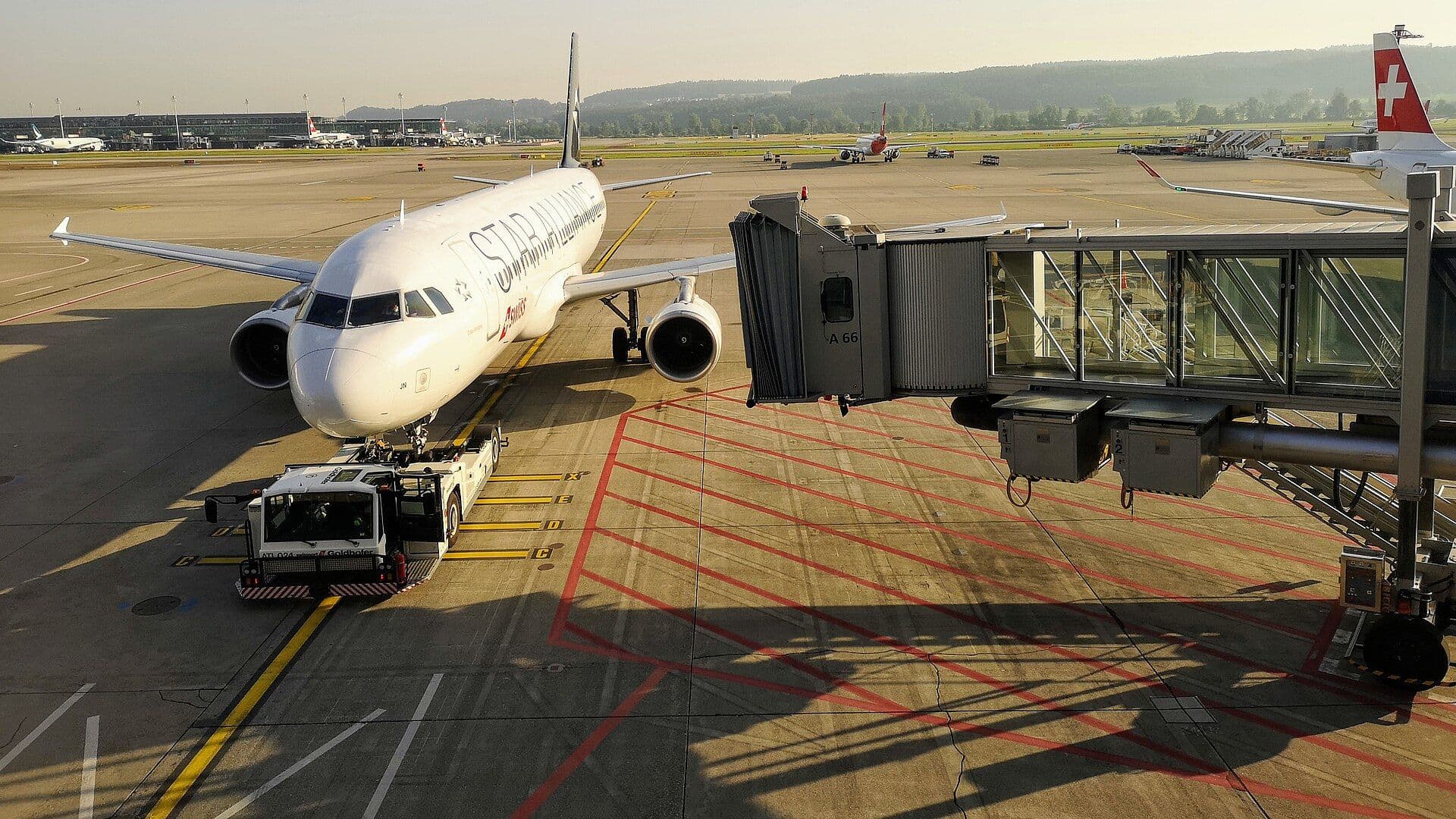
Taxiing is where the flight starts going right or wrong. The engine provides thrust to overcome rolling resistance, the pedals steer (via the rudder and nosewheel, depending on the aircraft), and the speed is kept at a walk. Nothing about the wing matters yet; everything about spacing, direction and speed matters completely.
On the take-off roll, three things happen in sequence:
- Thrust well above drag accelerates the aircraft; speed, not height, is the product.
- As speed builds, lift grows with the square of speed until it exceeds weight and the wheels unload.
- The aircraft lifts off and immediately enters the initial climb, the phase where a speed or attitude error has the least room to be absorbed.
Two effects complicate the picture. First, a headwind helps: it decreases the ground speed necessary to achieve flying speed, so a shorter ground roll produces the same flying speed. Second, ground effect: close to the surface, induced drag is reduced (by roughly a quarter when the wing is at a quarter of its span above the ground), so a marginal take-off can feel better down low than it really is. If the aircraft climbs out of ground effect before reaching a safe speed, the induced drag comes back and the initial climb can become marginal.
Climb: power for height
Once established in a climb, the aircraft is again in equilibrium, just on a tilted path. The forces resolve along and across that path: lift balances only the component of weight perpendicular to the flight path (, slightly less than weight), while thrust must both beat drag and hold back the weight component pulling the aircraft down the slope (). You will not accelerate in a steady climb, but you are spending more thrust than level flight at the same speed would.
Two reference speeds matter in the climb. The speed for the greatest gain in altitude per unit of time () is what you climb at when time matters; the speed for the greatest gain in altitude over a given distance () is what you climb at when obstacles matter. Handbooks publish both for each configuration, and the difference between them is the difference between getting high soon and getting over the hill.
Cruise: the balance point
Cruise is where the four forces sit in their classic arrangement: lift equals weight, thrust equals drag, and nothing accelerates. It is also where planning happens, because ground speed (true airspeed plus wind) now determines arrival time and fuel state. Small disturbances constantly unbalance the forces, and the pilot trims and corrects back: equilibrium in cruise is a dynamic achievement, not a permanent condition.
The energy state of the aircraft in cruise is the balance between airspeed, altitude, drag and thrust. Most of the time you are protecting one of those quantities while spending another: climb costs airspeed or fuel, a descent gives altitude back, a headwind spends time.
Descent and approach: gravity helps
In a descent, weight no longer acts solely perpendicular to the flight path. Reduce power and the thrust term shrinks, so either the airspeed grows or the flight path tips downward until the components balance again; a power reduction is required to balance the forces if airspeed is to be maintained while descending. The mirror image of the climb equations describes the steady descent: with the engines at idle, a component of weight now pulls the aircraft forward along the path, exactly the way it held it back in the climb.
The glide ratio quantifies the exchange: the distance travelled in relation to the altitude lost. An aeroplane that travels 10,000 feet forward while descending 1,000 feet has a glide ratio of 10 to 1, and best glide speed exists to maximise that distance.
Approach is where configuration changes everything. Flaps raise both lift and drag so the aircraft can fly slowly without stalling while descending at a manageable rate without accelerating. The approach should be stabilised: on speed, on path, with the power and configuration set, from a fixed altitude until touchdown. If the approach stops being stabilised, the standard response is the one every handbook describes: go around and try again.
Worked example: timing a complete flight
A training flight covers 60 nautical miles in the cruise, climbs 1,500 feet and comes back down. Illustrative numbers: 700 feet per minute climb, 110 knots ground speed in the cruise, 500 feet per minute descent.
- Climb: minutes to reach cruise altitude.
- Cruise: hours, about 33 minutes.
- Descent: minutes at the planned rate, plus the approach.
- Ground time: 6 minutes taxi out, take-off and landing allowances of a few minutes each.
- Total: roughly 2 + 33 + 3 + 10 ≈ 48 minutes door to door.
The lesson of the arithmetic is that the cruise dominates the clock while the climb and descent dominate the workload. Plans that ignore the climb and descent are wrong by minutes; approaches flown without a plan are wrong by much more.
A realistic scenario: the unstabilised approach
You are ten minutes from landing after a long flight. On final, the aircraft is 15 knots fast and 200 feet high, flaps are not yet at the planned setting, and the runway is short. The three standard responses are available in order of preference: slow down and get back on profile (add drag/configuration, reduce power), go around (full power, pitch for climb speed, retract flaps to the take-off setting as briefed, climb away and try a new approach), or continue with an unstable configuration, which is the option that produces the accidents the stabilised approach concept exists to prevent. Training repeats the go-around until it is boring precisely because the moment you need it, the weather is bad, the runway is short and the fuel is low.
Common misconceptions
"Cruise is the only phase in equilibrium." A steady climb and a steady descent are also equilibrium: no acceleration, forces balanced along the new path. Cruise is simply the purest case, where the balance takes the textbook form lift equals weight and thrust equals drag.
"Pulling the power back starts the descent." It starts an energy change: either airspeed builds up or the flight path drops, and often both in sequence. Energy management is deciding which one you are buying, rather than letting the aircraft decide for you.
"The take-off ends when the wheels leave the ground." The take-off includes the initial climb to a safe height and speed. Ground effect can flatter a weak acceleration, and low speed at low height is the combination that leaves no options.
"Flaps let you fly slower for free." Flaps buy lift with drag. They let you fly slowly and descend steeply without gaining speed, but they cost speed retention and change the stall speed, so they are used at published speeds in the published phase.
"Landing is the gentle part." Approach and landing compress navigation, configuration, speed control, energy management and decision-making into the phase with the least altitude to absorb errors. Handbooks devote whole chapters to it, and the go-around is written into every one of them.
Recap
- A normal flight runs taxi, take-off, climb, cruise, descent, approach, landing, each with its own objective.
- The take-off roll converts thrust into speed until lift exceeds weight; headwinds shorten the ground roll and ground effect flatters it.
- In a steady climb and ; buys height per unit of time and buys height per unit of distance.
- Cruise is the classic balance (lift equals weight, thrust equals drag) and the phase where wind converts into arrival time.
- Descents let a component of weight pull the aircraft along the path; glide ratio measures distance gained per altitude lost.
- Approaches should be stabilised, and the go-around is a normal manoeuvre, not an admission of failure.
Sources and further reading
- FAA: Airplane Flying Handbook (FAA-H-8083-3C), Chapter 2: Ground Operations (opens in a new tab)Accessed 9 October 2026
- FAA: Airplane Flying Handbook (FAA-H-8083-3C), Chapter 6: Takeoffs and Departure Climbs (opens in a new tab)Accessed 9 October 2026
- FAA: Airplane Flying Handbook (FAA-H-8083-3C), Chapter 9: Approaches and Landings (opens in a new tab)Accessed 9 October 2026
- FAA: Airplane Flying Handbook (FAA-H-8083-3C), Chapter 3: Basic Flight Maneuvers (opens in a new tab)Accessed 9 October 2026
- FAA: Pilot's Handbook of Aeronautical Knowledge (FAA-H-8083-25C), Chapter 5: Aerodynamics of Flight (opens in a new tab)Accessed 9 October 2026
- NASA Glenn Research Center: Forces in a Climb (opens in a new tab)Accessed 9 October 2026
Last editorial review: 9 October 2026. Authored 9 October 2026.
Knowledge check: Phases of Flight
Answer 5 questions to check what you learned. These are original Jonas Aviation practice questions: not official examination questions, and they grant no credit toward any certificate.
Finished this lesson?
Mark it complete to track your progress through the course on this device.